Welcome to Markus Schall

Current contributions

Corporate insolvency: A personal experience with a guide for times of crisis

Guide to corporate insolvency

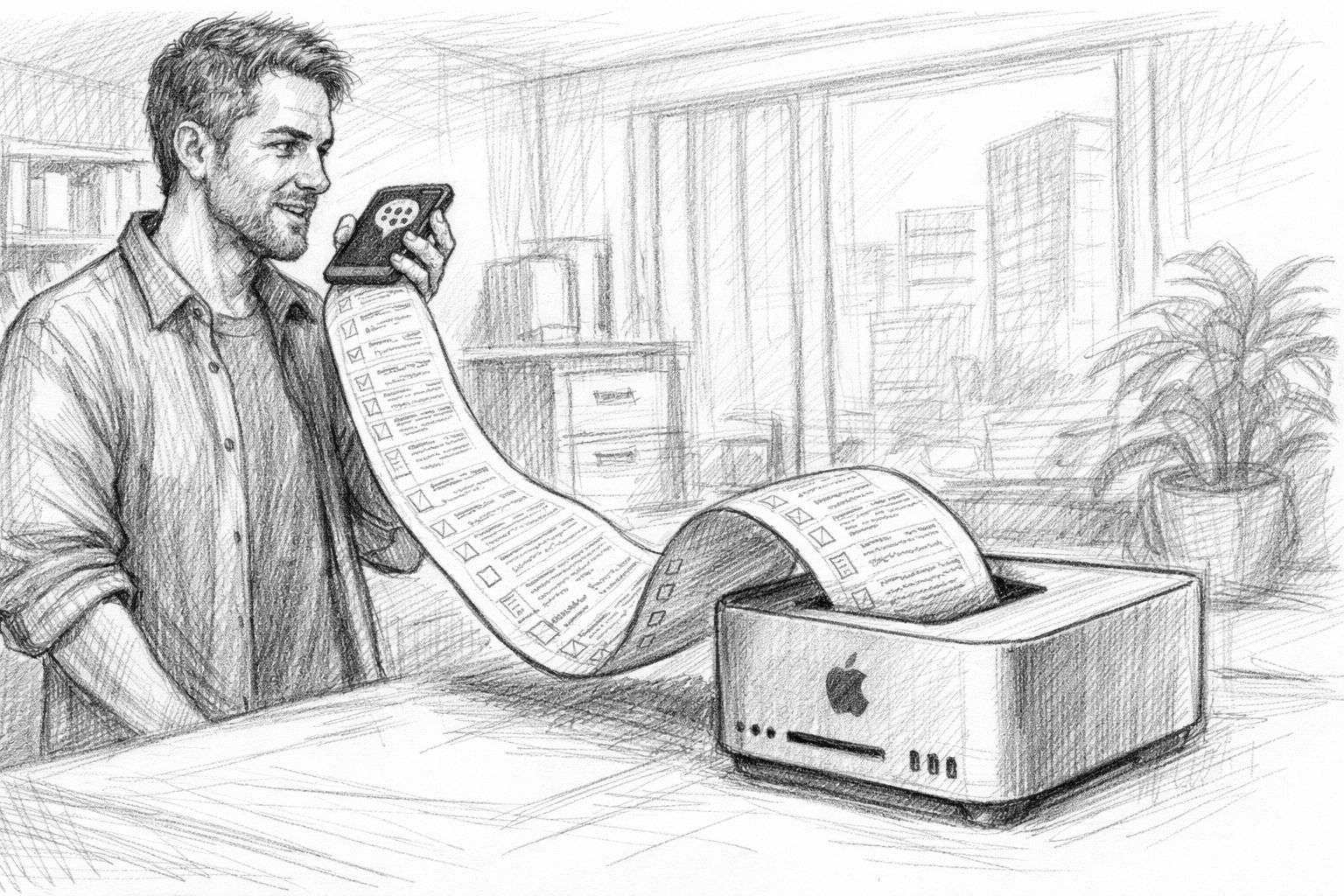
Looking back, it all started for me in 2007 with a business model that was surprisingly stable. I was selling refurbished Apple hardware and had a direct contact with Apple. More specifically, someone who was in charge of the refurbished department at the time. It wasn't an anonymous relationship, but a working relationship with clear agreements. The goods were in demand, the prices were realistic and the margins were solid - measured against what was to come later.

This model had a decisive advantage: it was flexible. The goods were cheaper to buy, the target group was price-sensitive but appreciative, and expectations were clear. Nobody expected high gloss, but function. This is often the healthiest phase for an entrepreneur: manageable costs, clear processes, few illusions.

Read more

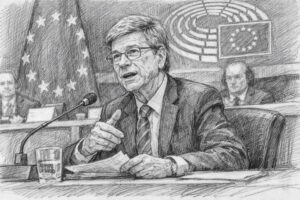
Ulrike Guérot: A European between idea, university and public discourse

Ulrike Guérot and Europe

There are people whose thoughts you like to follow not because you agree with them on everything, but because they make an effort to penetrate things. For me, Ulrike Guérot is one of these voices. I have been watching her lectures for several years now - not regularly, not ritualized, but when I come across a topic that I feel is worth listening to more closely. What strikes me is that her arguments are calm, structured and largely non-ideological.

This does not make her lectures spectacular in the media sense, but they are sustainable. You can listen to her for a long time without getting the feeling that she is trying to sell a ready-made world view. Especially at a time when political debates are often morally charged or emotionally truncated, this way of speaking seems almost old-fashioned. In the best sense of the word.

Read more

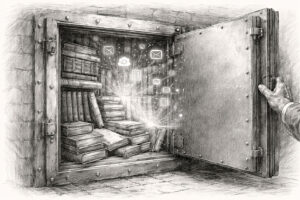
Reach is not ownership - Why visibility is no longer enough today

Reach vs. ownership

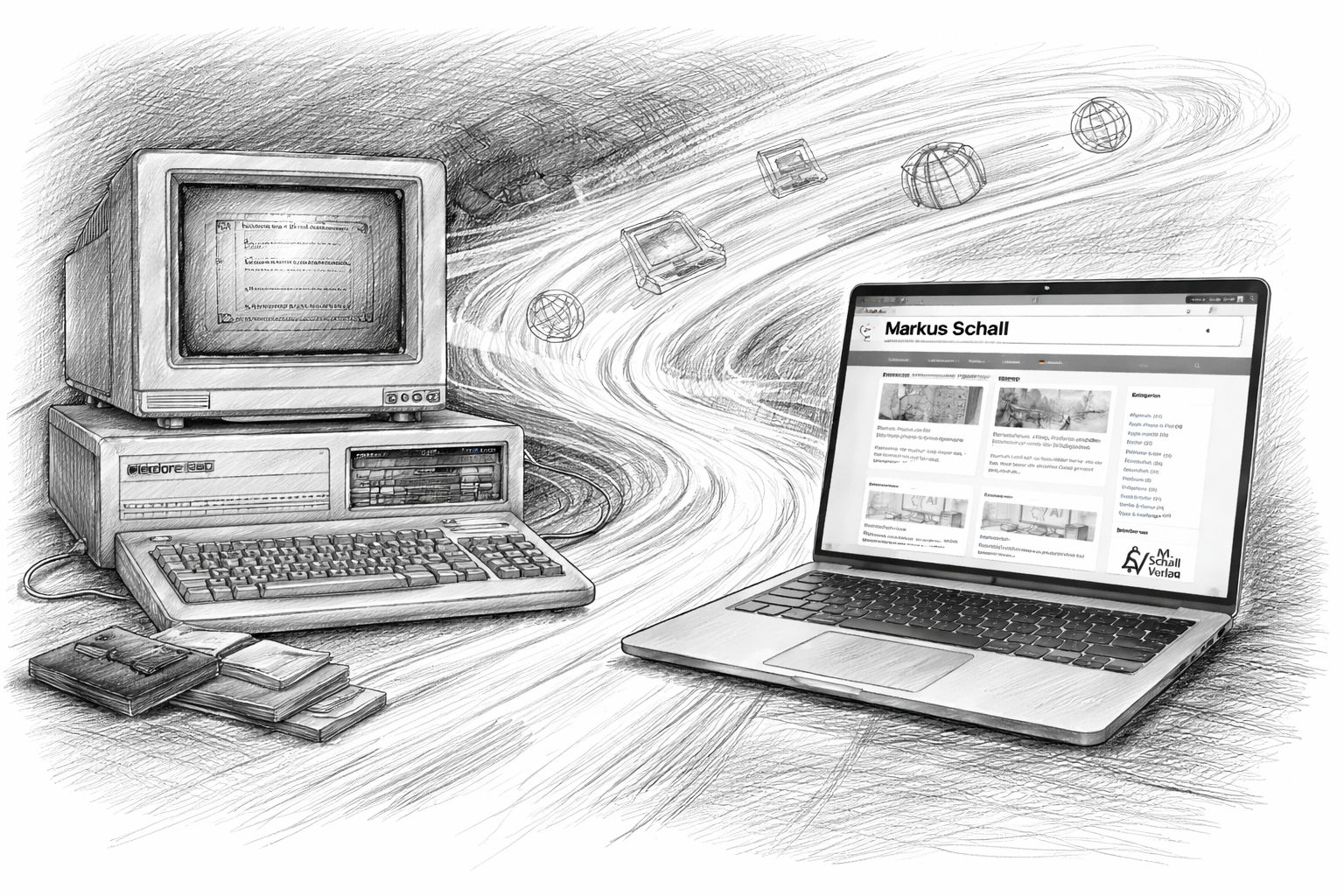
A good ten years ago, I happened to watch a lecture on the transition from the information society to the knowledge society. At the time, much of it still sounded theoretical, almost academic. It was about concepts such as data sovereignty, ownership of information and the question of who will actually determine what is accessible in the future - and what is not. Today, with a little distance, this lecture seems surprisingly precise. After all, much of what was described as a development back then has now become reality. More and more data has migrated to the cloud. More and more information is no longer stored on in-house systems, but in external infrastructures. And increasingly, it is no longer the user but a provider, a platform or a set of rules that decides what is possible.

To understand this development, it is worth taking a step back. The information society in which many of us grew up was not a normal state. It was a historical exception.

Read more

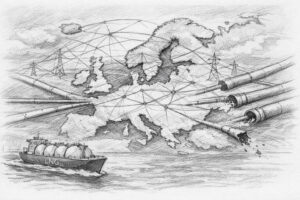
Game theory explains 25 years of geopolitics: How Europe lost its strategic role

Game theory explains 25 years of geopolitics

For many, game theory sounds like dry mathematics, like formulas, like something that only plays a role in lectures or business games. In reality, however, it is an ancient thinking tool that existed long before its academic formalization. Diplomats used it, commanders used it, captains of industry used it - long before it was even called that. In the end, it is nothing more than a sober question:

„When several players have to make decisions in an uncertain situation - what options do they have and what are the consequences?“

This kind of thinking has become surprisingly rare today. Instead of analyzing alternatives, much is narrowed down to moral narratives or spontaneous interpretations. Yet in geopolitical issues in particular, a clear analysis of the possibilities would be the foundation of any mature policy. It is precisely this old craft that I would like to take up again in this article.

Read more

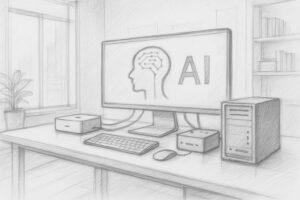
Cloud AI as head teacher: why the future of work lies with local AI

Cloud AI becomes the head teacher

When the large language models began their triumphal march a few years ago, they almost seemed like a return to the old virtues of technology: a tool that does what it is told. A tool that serves the user, not the other way around. The first versions - from GPT-3 to GPT-4 - had weaknesses, yes, but they were amazingly helpful. They explained, analyzed, formulated and solved tasks. And they did this largely without pedagogical ballast.

You talked to these models as if you were talking to an erudite employee who sometimes got lost, but basically just worked. Anyone who wrote creative texts, generated program code or produced longer analyses back then experienced how smoothly it went. There was a feeling of freedom, of an open creative space, of technology that supported people instead of correcting them.

Read more

Permanent crisis as a normal state: How narratives distort our perception

Permanent crisis, narratives

It's strange how certain developments creep up quietly and only reveal their full impact in retrospect. When I think about how I perceive the news today, I realize that my approach to it changed fundamentally more than twenty years ago. Since the turn of the millennium, I have hardly watched any traditional television news. It was never a conscious decision against something - more a gradual growing out of it. At some point, I simply realized that the daily bombardment of alternating doomsday scenarios was neither improving my life nor making my vision clearer.

Read more

Jan-Josef Liefers: A portrait of attitude, origins and artistic freedom

Jan-Josef Liefers

When you see Jan-Josef Liefers today as the eccentric Professor Boerne in „Tatort“, it's easy to forget how long it took to get there. I myself have always enjoyed seeing him in this role: as a mixture of subtlety, narcissism, humor and astonishing clarity. But this mixture doesn't come out of nowhere. It is the result of a life that began in a completely different Germany - in the GDR, in a country with narrow borders and clear guidelines.

To understand why Liefers takes such a consistent stance today, you have to go back to his childhood, to his parents' theater world and to a time when criticism of the system was anything but without consequences.

Read more

State of the German economy in 2025: Five years of crisis, figures, trends and outlook

State of the German economy in 2025

If you look at the German economy today, it is almost impossible to separate the last five years. It was a chain of events that overlapped, reinforced and in some cases blocked each other. The starting point was 2020 - the year in which the pandemic brought public life, supply chains and entire industries to a standstill in one fell swoop. Many companies had to close, production was interrupted and government aid was provided to prevent the economy from collapsing completely in the short term.

However, what seemed like a temporary exceptional situation at the time developed into something bigger: The consequences of the decisions made at the time still affect the everyday lives of entrepreneurs, the self-employed and employees today. Anyone who thought back then that after a few months everything would be „as it used to be“ can now see that many things have changed permanently.

Read more