


Magazine for Europe, AI, digitalization & society

Current contributions

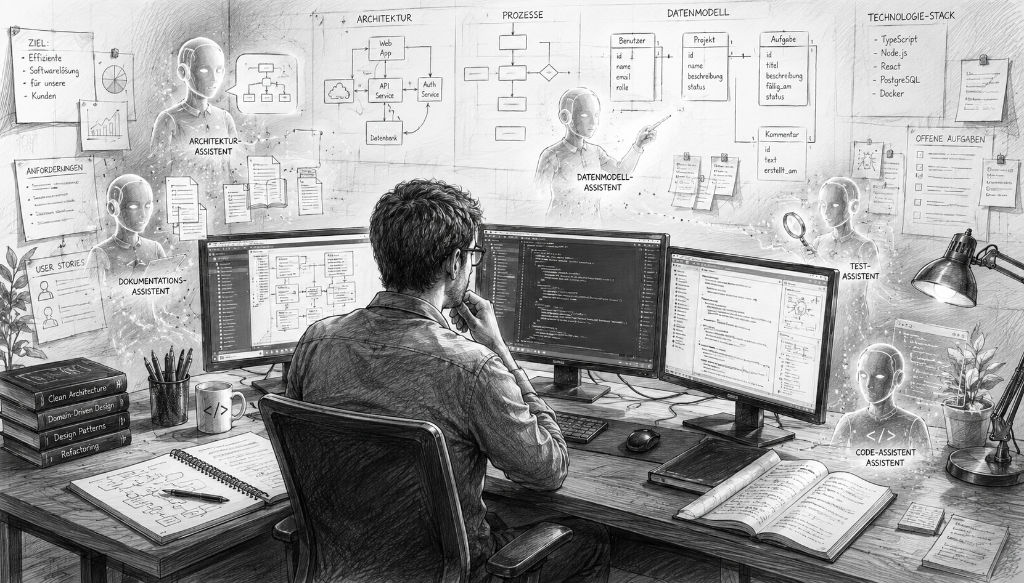
Software Development with Codex, ChatGPT, and AI: A Practical Guide for Developers

Software Development with AI

If you had asked me a few years ago what software development would look like in ten years, I would probably have talked about new programming languages, better frameworks, or more powerful development environments. Today, my answer would be completely different. The biggest change isn’t happening with the tools, but in the way we as developers think and work.

As I write these lines, I am working on a new software system myself. For the past few weeks, I have been making extensive use of modern AI tools such as Codex and other language models. At first, I was curious; now, I’m mostly impressed. Not because the AI suddenly does everything on its own, but because it handles certain tasks surprisingly well, thereby enabling new ways of working.

Read more

Donald Trump in the US system - origins, power, media and impact

Donald Trump in the USA system

Donald Trump is no ordinary political figure. He is not a classic statesman, not an ideologically trained party soldier, not a product of decades of Washington networks. Trump is one thing above all: a projection screen. For hopes, for fears, for anger, for rejection - and for expectations that go far beyond concrete policies. This is precisely the reason why a portrait of him makes sense. You don't have to like or dislike him, but he definitely makes something visible that was already there.

Trump does not just stand for decisions or programs. He represents a rupture in the political self-image of the Western world. And this rupture cannot be explained by viewing him merely as a „populist“, „provocateur“ or „accident of history“. If you want to understand Trump, you have to see him as both a symptom and an actor.

Read more

What is the meaning of life? A comparison of religions, philosophers and Helmut Thielicke

The question of the meaning of life

There are questions that have been with mankind for thousands of years. Questions that never really go away, no matter how modern our world becomes. One of these questions is probably quite simple: What is actually the meaning of life?

Interestingly, the answer „42“ appears again and again today - usually with a little smile. The background comes from „The Hitchhiker's Guide to the Galaxy“ by Douglas Adams. In the story, a highly developed civilization builds a gigantic supercomputer that is supposed to calculate the „answer to the ultimate question about life, the universe and the rest“ over millions of years. In the end, the result is simply: 42. The absurd thing about it is that no one actually knows exactly what the original question was in the end.

That's exactly why this scene became world famous. It is funny, but at the same time surprisingly profound. Because perhaps it describes a basic human problem quite aptly: we often desperately search for answers without even knowing exactly what question we are actually asking.

Read more

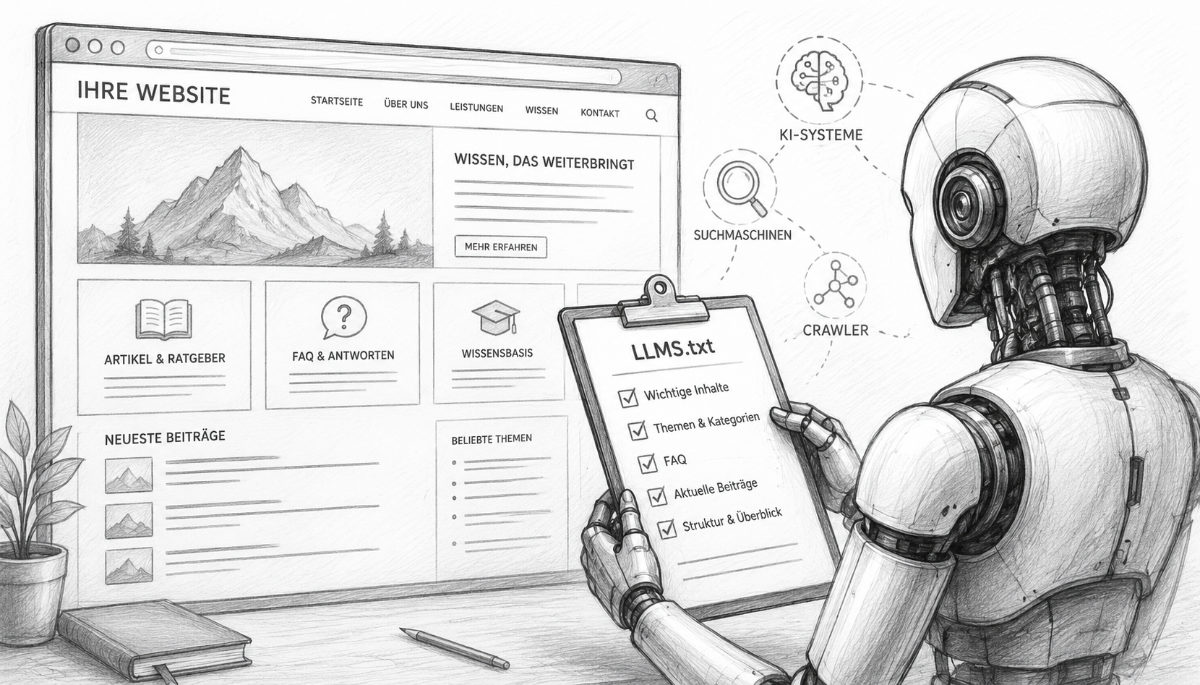
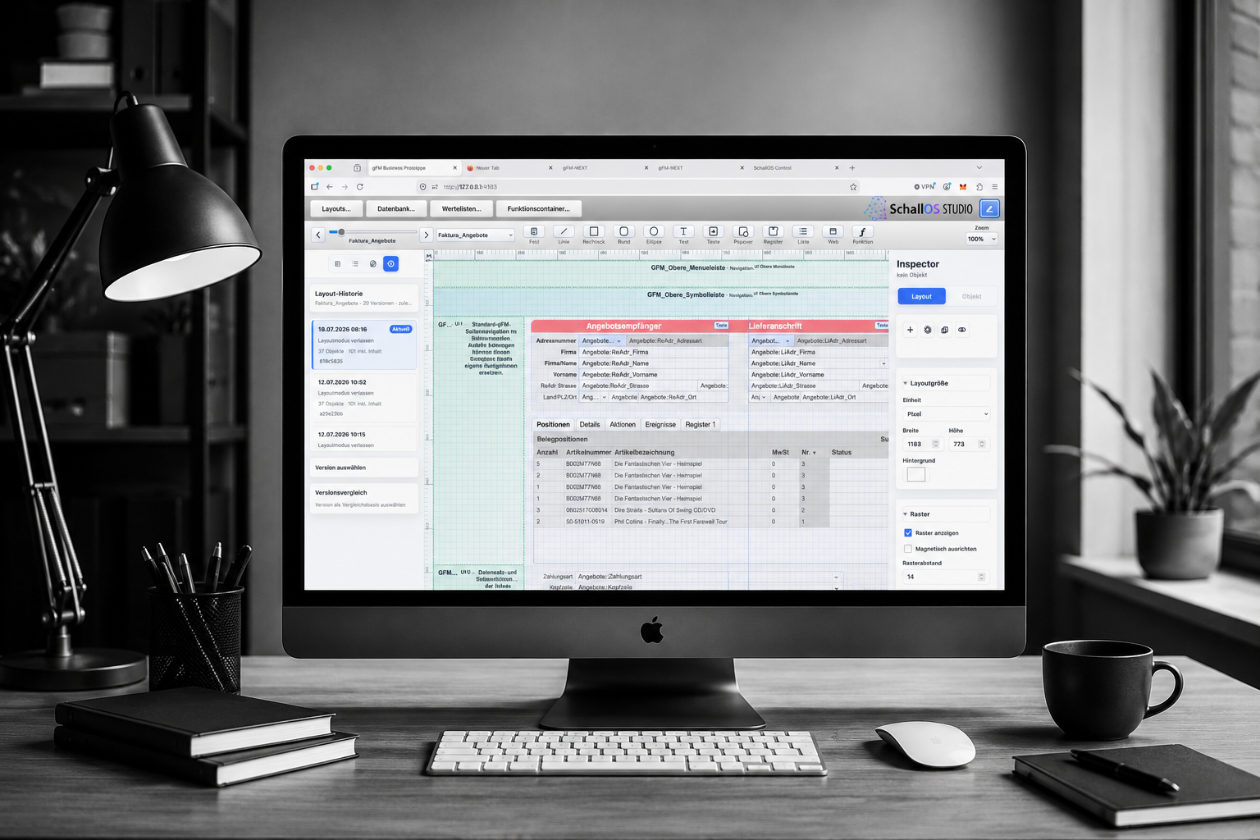
How artificial intelligence is changing software development and FileMaker

AI evolution in the development of FileMaker databases

Anyone currently scrolling through news portals, social networks or business platforms will quickly get the impression that artificial intelligence is changing the entire working world practically overnight. New tools, new language models and new promises appear almost daily. Texts are written automatically, images are generated, videos are created and software is sometimes prepared by voice input.

For many companies, this creates a strange mixture of curiosity and pressure. Because, of course, nobody wants to miss the boat. At the same time, many entrepreneurs, freelancers and developers do not yet know exactly which of these technologies will really remain relevant in the long term. This is probably the real peculiarity of the current AI phase: almost everyone senses that something is changing - but hardly anyone can really reliably assess at the moment how quickly and in which direction.

Read more

How the pandemic taught economists a lesson about inflation, growth and economic recovery

Economists' assumptions during the pandemic

Even during the coronavirus pandemic, many economists were surprisingly unanimous: the great danger was a phase of low inflation, perhaps even deflation. A few years later, the picture is different. Inflation reached historic highs in many countries, supply chains collapsed and economic developments turned out differently than expected.

The pandemic was not just a health crisis - it was also a stress test for economic forecasts. This article shows where experts were wrong, why this was the case and what lessons can be learned for future assessments.

Read more

From content to substance: how digital systems are created that cannot be copied

System instead of individual content

When you move around in the digital space today, you very quickly get a certain impression: if you are visible, you are successful. If you have reach, you have influence. And if you produce a lot of content, you automatically build up something. This equation seems plausible at first glance - but it is deceptive. Because visibility is not ownership. Reach is not ownership. And content is by no means a foundation.

A post can be read thousands of times and yet practically disappear after a few days. A social media post can go viral - and at the same time have no lasting effect. Even well-placed content in search engines is not automatically stable. They depend on algorithms, platform rules and developments that you have no control over.

Read more

Guided in everyday life - How modern sales tricks control our behavior

Sales tricks in the supermarket and online

It's often the little things that make you wonder. No big events, no loud break - rather a quiet moment when you stop and ask yourself: wasn't it different before? I recently had such a moment in the supermarket. A store I've known for many years. One of those places where you don't have to think. You know where things are. Milk at the back on the right, bread at the front on the left, the usual routes in between. It's a quiet form of reliability that you hardly notice in everyday life - as long as it's there.

But this time something was different. I was looking. Not for long, but longer than usual. The milk was no longer where it always was. A few steps further, then back again. Finally I found it - but the thought remained. Why? At first it seems banal. A shelf is rearranged, a product is moved. That happens. But when such moments accumulate, the whole thing loses its random character. It creates an impression that is difficult to grasp, but is nevertheless tangible: something is being changed here - not for me, but with me.

Read more

Recognize TMD early and self-test: Why the jaw, neck, head and ears are often connected

TMD self-test

There are complaints that cannot be classified for a long time. A pulling sensation in the jaw that you initially ignore. A headache that you blame on stress. A slight cracking sound when you open your mouth that eventually becomes a habit. And then suddenly there is neck pain, perhaps a slight feeling of pressure in the ear - all explainable in themselves, but strangely unclear in the overall picture. This is exactly how it starts for many people. You go to the dentist, perhaps later to the orthopaedist or ENT specialist. Everyone looks at their own area, and often nothing clear is found. The complaints remain - sometimes for years.

I have experienced this path myself. And it was only when I was intensively involved with the topic of TMD, particularly when I was setting up a structured self-test, that I realized how many of the typical symptoms I had actually experienced over time. Individual points that seem harmless on their own suddenly form an overall picture. This article is intended to help with exactly that: to make the connections visible. Because the decisive step is often not in the treatment, but in recognizing the pattern.

Read more